The Awakening Earth
Estimated reading time: 2 minutes
Key Takeaways
- Raymond and Denis Noble’s book, Understanding Living Systems, promotes a non-gene-centric perspective on life.
- It introduces the concept of nested functionality within living systems, emphasizing multi-directional causation.
- The book argues that human motivations, influenced by social and cultural constraints, shape our behaviour and responsibilities towards ecosystems.
- The authors encourage awareness to prevent the destruction of vital habitats, linking our actions to the awakening Earth.
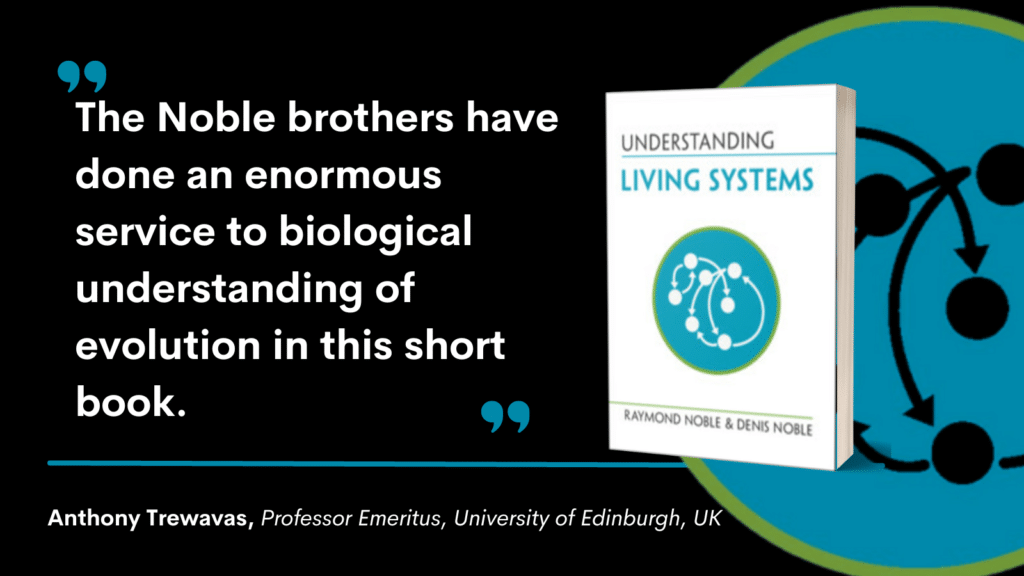
Raymond and Denis Noble discuss their book, Understanding Living Systems, published by Cambridge University Press in July 2023. The book ends with a call to arms as humans awaken to their responsibility for our precious ecosystems- Earth’s awakening. In this video, Denis reads from the final paragraphs.
Nested functionality
The book presents a non-gene-centric view of living systems, where genes are considered tools of the system rather than its master. We also presented the idea of nested functionality: organelles function within cells, cells within tissues, tissues within organs and organ systems within the body. This nested organisation provides causation in all directions, not just from the bottom up from the biochemistry, but also from the top down.
Our motivations drive our behaviour
Each level of function constrains those within it, shaping functionality and structure through anatomy, physiology and evolution. We also argued that constraints need not be material. They can also be social, cultural, and linguistic. This is how we, humankind, are the awakening earth. The mind can be viewed as the interactions and constraints most related to logical thought; the soul can be viewed as the interactions and constraints most related to our emotions and character. The question then is whether we are sufficiently aware to act to prevent our continued destruction of vital habitats.