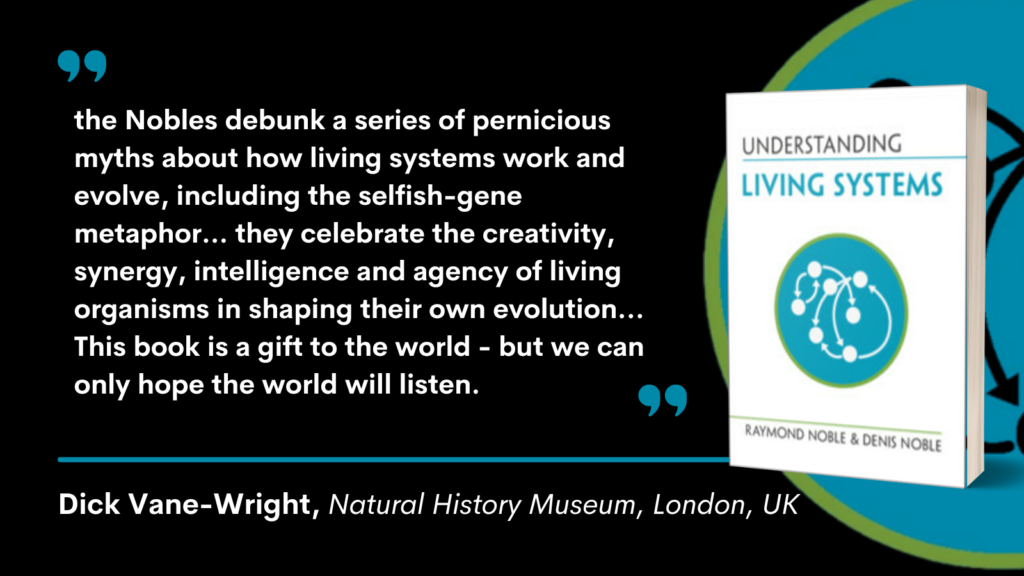
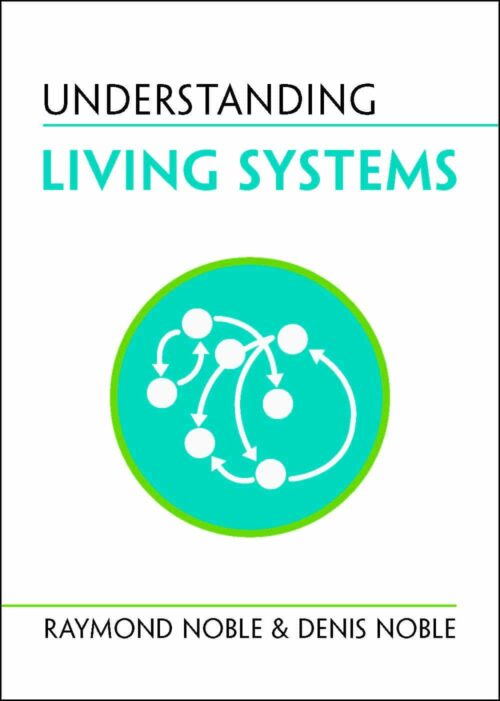
Understanding Living Systems
Key Takeaways
- The book introduces a paradigm shift, viewing the genome as a tool the organism orchestrates rather than a deterministic blueprint or code.
- Cambridge University Press published our book, Understanding Living Systems, in July 2023.
- We challenge the selfish gene metaphor, arguing genes act as part of an integrated system guided by the organism.
- Our model presents causation as a continuous web, contrasting with the upward causation of selfish gene theory.
- Understanding Living Systems will change your perspective on life, revealing it as a triumph of evolution.
Understanding Living Systems – The book.
Cambridge University Press published our book, Understanding Living Systems, in July 2023. Denis and I were pleased to appear as guests on Perry Marshall’s podcast, where we discussed the book. This episode highlights our extraordinary enthusiasm and creativity in writing Understanding Living Systems. Why did we write it? What is it about? Why is it necessary? Thank you, Perry Marshall, for guiding us through this exciting discussion.
The agency of organisms
Life is inherently purposive and creative, with organisms actively using genes to shape their destinies. This book introduces a paradigm shift in how we understand living systems. Rather than viewing the genome as a static code, blueprint, or set of instructions, it presents it as a tool the system itself orchestrates. Moreover, it challenges the gene-centric view, showing that it misrepresents both what genes are and how living systems utilise them. The book further shows that organisms make choices that influence their behaviour, development, and evolution, thus acting as agents of natural selection. Additionally, it offers a novel approach to fundamental philosophical and cultural questions, such as free will. Ultimately, reading this book will change your perspective on life, revealing it as a marvellous phenomenon and a triumph of evolution. In essence, we are not in our genes; rather, our genes are within us.
We argue that the metaphor of genes being “selfish” misrepresents their role in biological systems. Even if we accept Richard Dawkins’s use of it as a metaphor, it remains incorrect. Genes cannot and do not act independently or selfishly; instead, they are part of an integrated system guided by the organism. Moreover, we believe that the simplistic dualism of genes as the driver and the organism as a vehicle is a profound philosophical and scientific mistake.
Nested functionality in a web of systems
Another key feature of our model, as presented in the book, is that causation is a continuous web of functional processes with no privileged level. This contrasts with upward causation in selfish gene theory, where genes are said to shape organismal behaviour and development. Here, these terms distinguish the direction of influence between levels.