
Raymond Noble
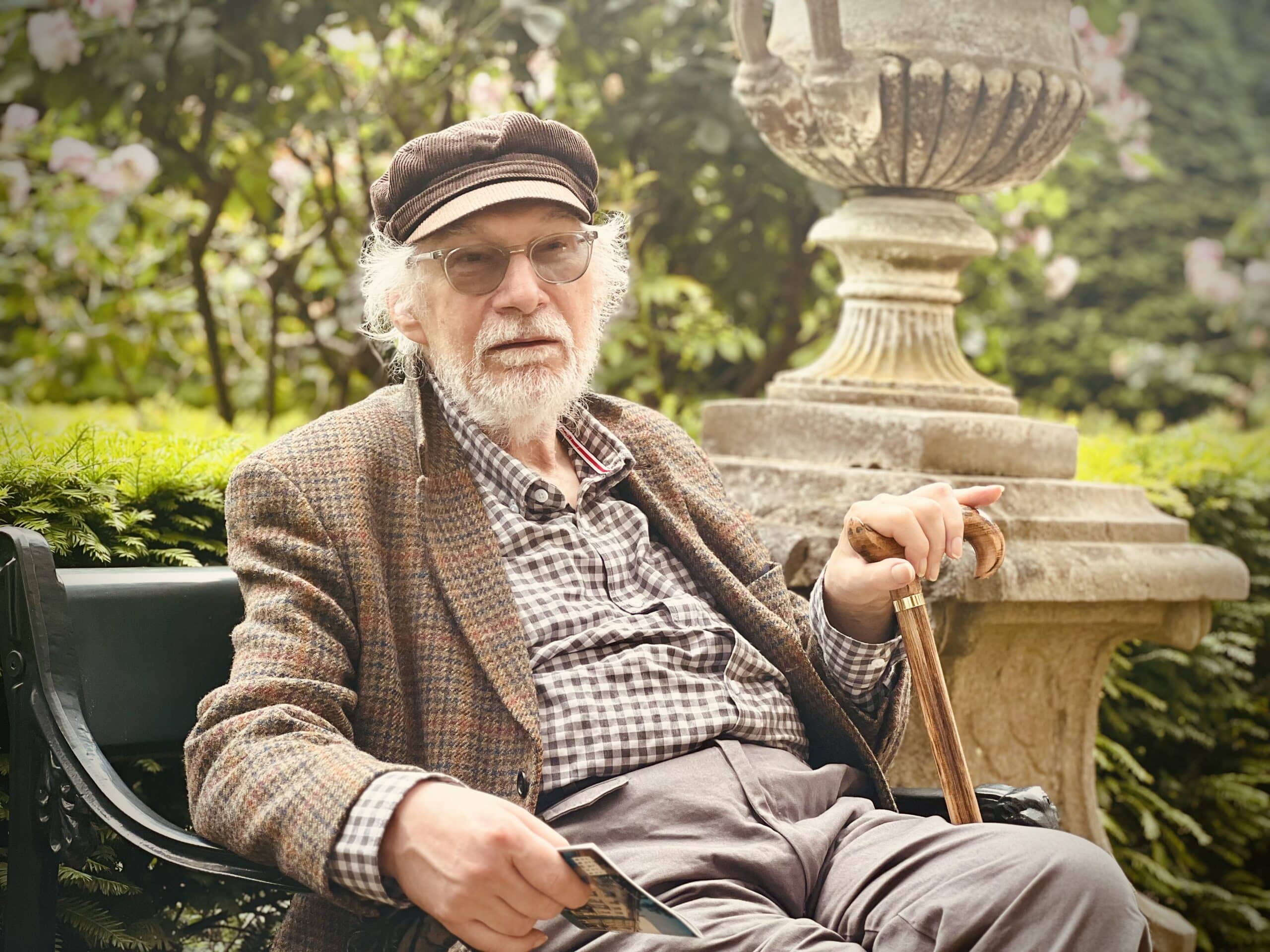
Raymond Noble’s Academic Background and Roles
Estimated reading time: 6 minutes
Raymond Noble is an academic at University College London (UCL), specifically in the Institute for Women’s Health. He is an Honorary Associate Professor with a background in zoology and neuroscience. His work spans biological theory, philosophy, and how organisms sense their environment and make choices.
Key Takeaways
- Raymond Noble is an Honorary Associate Professor at UCL, specialising in zoology and neuroscience, with a focus on biological theory and decision-making in organisms.
- He co-authored the book ‘Understanding Living Systems’ and earned the UCL Provost’s Award for Excellence in Teaching.
- Noble critiques the selfish gene theory, emphasizing genes as part of a complex system influenced by organisms rather than passive entities.
- He founded a Collaborative Centre for Reproductive Ethics and Rights and contributed to ethical guidelines in maternal-fetal medicine.
- Raymond Noble’s research has implications for understanding SIDS and premature birth, highlighting his significant contributions to biology and ethics.
Contributions to Literature and Teaching
Noble co-authored the book “Understanding Living Systems” with Denis Noble, published by Cambridge University Press in 2023. He has also taught medical ethics in reproductive health and received the UCL Provost’s Award for Excellence in Teaching. His academic interests also extend into the nature of causality in biological systems and the creative choices organisms make.
Raymond Noble’s Professional Recognition and Leadership Positions
Raymond Noble is a Fellow of the Royal Society of Biology and a chartered biologist. He was Deputy Dean of Life Sciences, Graduate Tutor in Women’s Health, and Director of the Centre for Reproductive Ethics. He held a Rockefeller Senior Research Fellowship (1990 -1996) with a joint appointment in Physiology and Obstetrics and Gynaecology at University College London,
Critique of The Selfish Gene Theory
Raymond criticises treating genes as the primary units of selection, or as a ‘blueprint’ for life. They instead present a view in which genes are one part of a complex system, and organisms actively shape evolution.
Organisms as Active Agents in Evolution
Raymond and Denis Noble see organisms as active agents in evolution. Natural selection is not passive, but involves reciprocal relationships between organisms and niche creation.

The Limits of the ‘Selfish Gene’ Metaphor
They argue that the metaphor of genes being “selfish” misrepresents their role in biological systems. Genes do not act independently or selfishly; instead, they are part of an integrated system guided by the organism.
Downward and Upward Causation in Biology
Raymond Noble contends that causation is a continuous web of processes with no privileged level. This contrasts with upward causation in selfish gene theory, where genes are said to shape organism behaviour and development. Here, these terms distinguish the direction of influence between levels. Causation is generally a continuous web of processes, with no privileged level.
Testability and Circularity of Gene-Centric Views
Raymond Noble also argues that the selfish gene hypothesis is not straightforwardly testable. If “selfish” means any gene that increases in frequency, the claim becomes a tautology. This makes the hypothesis circular and hard to falsify. In this context, “selfish” is defined in a way that weakens testability.
The Systems Biology Approach
Raymond and Denis Noble advocate a systems biology approach with interactions and networks across multiple levels. They emphasise physiological processes, environmental and ecological interactions, and the organism’s role in evolution. Here, systems biology means explaining biology through interconnected levels, not genes alone.
Public and Academic Discourse:
Raymond Noble is a biologist specializing in causation in biology and organismal decision-making. He studied Zoology at Manchester during the 1970s and holds a PhD in neuroscience from Edinburgh. Currently, he serves as an Honorary Associate Professor at the Institute for Women’s Health. His previous roles include Deputy Dean of Life Sciences at UCL and graduate tutor. A Chartered Biologist and Fellow of the Royal Society of Biology, Noble authored the well-regarded book Understanding Living Systems, which challenges gene-centric perspectives on organism functions and behavior.
Reproductive Ethics and Rights
Raymond Noble founded a Collaborative Centre for Reproductive Ethics and Rights at the UCL Institute for Women’s Health in 2005. The centre focuses on issues at the intersection of clinical Women’s Health practices and ethical understanding in biomedical sciences. He also taught ethics courses in medical and life sciences at UCL. He served as vice-chair on an NHS Trust research ethics committee and contributed to ethics education at the Royal Veterinary School in London.
Ethical framework for fetal therapy
Raymond Noble has contributed significantly to the ethical framework surrounding maternal-fetal medicine and fetal therapy. Alongside co-author Charles H. Rodeck, Noble formulated core ethical guidelines outlining the delicate balance between the clinician’s duties to both the pregnant woman and the fetus.
Embryo genetic diagnosis
Noble’s ethical perspective on Preimplantation Genetic Diagnosis (PGD) bridges scientific advancement and strict moral boundaries. Noble generally views PGD as a valuable clinical tool for preventing severe, debilitating, or lethal genetic conditions, but warns strongly against its expansion into “social selection” or cosmetic eugenics. The UK’s Human Fertilisation and Embryology Authority (HFEA), the statutory gatekeeper for reproductive technologies in the UK, enforces a highly cautious approach to PGD that closely aligns with Raymond Noble’s bioethical pillars, particularly by restricting genetic selection to severe medical conditions.
Collaboration in India
In 2007/8, with British Council UKIERI funding, Raymond Noble established a short course in medical ethics in India. carried out pilot research with focus groups of women attending community clinics in rural Andhra Pradesh, investigating views on informed consent and confidentiality and their impact on healthcare access.
Somatosensory research
In the 1970s and 1980s, Raymond Noble, Andrew Short, and Richard Koerber demonstrated how excitatory and inhibitory neurons interact in processing primary sensory input.
Breathing in the newborn
In the late 1980s and 1990s, Raymond’s team demonstrated an inhibitory pathway that suppresses breathing during hypoxia.
The “Hypoxic Switch”
Discovery of the Brain’s “Hypoxic Switch”: Academic and institutional profiles highlight Noble’s team for identifying a specific inhibitory pathway in the brainstem (implicating the red nucleus). His research explained a dangerous physiological paradox: while adults breathe faster when starved of oxygen, newborns suppress breathing when oxygen levels drop.
SIDS and Premature Birth Implications
Within scientific networks, Noble’s publications (such as his landmark 1995 and 1997 papers in The Journal of Physiology and Respiratory Physiology) were widely cited as foundational to understanding Sudden Infant Death Syndrome (SIDS) and respiratory depression in premature infants.
Professor Raymond Noble has extensively written about nature and the human condition.
Raymond appears on radio and television and publishes widely on science, humanities, and politics.